Safety in the Backcountry: Decoding the Best Avalanche Beacon for Skiers
Navigating the Backcountry: Your Ultimate Guide to Avalanche Beacons
When venturing into the pristine and untamed wilderness of the backcountry, avid skiers are drawn to the thrill of carving through untouched powder and exploring remote slopes. However, the allure of off-piste skiing comes with inherent risks, and among these dangers, avalanches pose a formidable threat. Understanding the critical role that safety equipment plays in mitigating these risks, no skier should embark on a backcountry adventure without a reliable and effective avalanche beacon.
This comprehensive guide aims to assist backcountry skiers, both novice and experienced, in making an informed decision when selecting the best avalanche beacon for their needs. An avalanche beacon, also known as a transceiver, serves as a lifeline in the event of an avalanche, allowing rescuers to locate buried skiers swiftly and accurately. Choosing the right beacon can make a crucial difference between life and death in such dire circumstances.
In this article, we will delve into the intricate world of avalanche beacons, exploring their functionality, various types, and key factors to consider when making a purchase. We will discuss important considerations such as range and search capabilities, ease of use, battery life, durability, and additional features that can enhance overall safety and rescue operations.
To provide you with valuable insights, we will review some of the top avalanche beacons currently available on the market. By analyzing their features, pros and cons, and user experiences, we aim to assist you in finding the perfect beacon that aligns with your specific requirements and skiing style.
While the selection of an avalanche beacon is crucial, we emphasize that this article is not a substitute for proper education, training, and experience in backcountry travel and avalanche safety. Rather, it serves as a stepping stone to empower skiers with the knowledge necessary to make an informed decision when it comes to this essential piece of equipment.
Whether you are a seasoned backcountry enthusiast or a newcomer to the world of off-piste skiing, this article will equip you with the necessary information to navigate the backcountry with confidence and preparedness. Remember, the mountains are unforgiving, and a well-chosen avalanche beacon can be your lifeline in the face of an unexpected disaster.
Join us as we embark on a journey to unravel the intricacies of avalanche beacons, exploring their inner workings, evaluating their features, and ultimately helping you select the best companion to accompany you on your backcountry escapades. Together, we will prioritize safety and strive for an exhilarating and responsible skiing experience that allows us to embrace the beauty and grandeur of nature while minimizing risks.
Understanding Avalanche Beacons
What is an avalanche beacon?
Before diving into the technical aspects of avalanche beacons, it is essential to understand their purpose and how they function. An avalanche beacon, or transceiver, is a compact electronic device designed to aid in the location and rescue of individuals buried under snow in the event of an avalanche. It emits a radio frequency signal that can be detected by other beacons, facilitating the search and retrieval process.
How does an avalanche beacon work?
Avalanche beacons operate on the principle of two distinct modes: transmit and search. In transmit mode, the beacon emits a continuous radio signal, usually at a frequency of 457 kHz, which can be detected by other beacons. When a skier is buried under an avalanche, they switch their beacon to search mode, allowing it to receive signals from other beacons in the vicinity.
During a rescue operation, search mode enables rescuers to determine the direction and distance to the buried skier. As rescuers move closer to the victim, the signal strength increases, providing them with critical information to narrow down the search area and pinpoint the buried skier’s location.
The different types of avalanche beacons available
There are primarily two types of avalanche beacons available on the market: analog and digital. Analog beacons, also known as single-antenna beacons, were the first type to be widely used. They provide a basic search interface that relies on audio signals and visual indicators to guide rescuers towards the buried skier.
Digital beacons, on the other hand, have gained popularity due to their enhanced search capabilities and user-friendly interfaces. These beacons often feature multiple antennas, allowing for more precise signal direction and distance measurements. Digital beacons provide visual displays, including icons, directional arrows, and distance readings, which aid in the search process.
It’s worth noting that analog beacons are becoming less prevalent as digital technology continues to advance. However, some backcountry skiers, particularly those experienced with analog beacons, still choose them for their simplicity and reliability.
Understanding the differences between analog and digital beacons is essential when selecting the right beacon for your needs. While digital beacons offer more advanced features, they may also require a steeper learning curve for inexperienced users.
By comprehending the fundamental workings of avalanche beacons and the different types available, you can make a more informed decision when it comes to selecting the beacon that suits your skill level, comfort, and overall requirements.
In the next section, we will delve deeper into the key factors to consider when choosing an avalanche beacon, ensuring that you have a comprehensive understanding of the features that matter most in the backcountry.
Key Considerations for Choosing an Avalanche Beacon
Range and search capabilities
One of the primary considerations when choosing an avalanche beacon is its range and search capabilities. The range refers to the maximum distance at which a beacon can detect a buried signal, and it plays a vital role in the efficiency and effectiveness of a rescue operation.
A beacon with a longer range allows rescuers to detect signals from a greater distance, reducing the search area and expediting the rescue process. However, it’s important to note that a longer range alone does not guarantee success in finding a buried skier. Factors such as signal interference, terrain, and burial depth can affect the actual range achievable in real-life scenarios.
Additionally, understanding the difference between single and multiple antenna beacons is crucial. Multiple antenna beacons, commonly found in digital models, provide more accurate signal direction and distance measurements, enabling rescuers to locate buried skiers with greater precision. This advanced technology can be particularly beneficial in complex and challenging search scenarios, such as multiple burials.
Ease of use and user interface
In a high-stress situation like an avalanche rescue, ease of use and an intuitive user interface are paramount. When seconds count, having a beacon with a user-friendly design and straightforward controls can make a significant difference.
Consider the layout and accessibility of the buttons and switches on the beacon. Can they be easily operated with gloves on? Are the controls clearly labeled and intuitive to navigate? These factors contribute to the overall usability of the beacon and can greatly impact your ability to operate it efficiently under duress.
Another essential aspect of the user interface is the beacon’s display. Clear visibility in various lighting conditions, including low light and direct sunlight, is crucial. The display should provide easily readable information, such as directional arrows, distance measurements, and battery life indicators. Evaluating the visibility and readability of the display is vital to ensure that you can effectively interpret the beacon’s feedback during a search operation.
Battery life and power management
The battery life of an avalanche beacon is a critical consideration, as it directly impacts the beacon’s reliability during extended backcountry trips. Skiers often spend long hours in remote areas, where access to power sources is limited. Therefore, selecting a beacon with sufficient battery life is essential for peace of mind.
Beacons typically use alkaline or lithium batteries. Lithium batteries have a longer lifespan and perform better in cold temperatures, making them an ideal choice for backcountry skiing. Some beacons also offer power-saving features, such as sleep mode or auto-off timers, which help conserve battery life during periods of inactivity.
Additionally, it is important to consider the ease of battery replacement. Can the battery be easily replaced in the field without requiring additional tools? This factor can be crucial when considering the longevity and usability of the beacon in demanding backcountry conditions.
Durability and ruggedness
Backcountry skiing exposes equipment to harsh environments, including extreme temperatures, moisture, and rough handling. Therefore, selecting a beacon that can withstand these conditions is vital.
Evaluate the build quality and ruggedness of the beacon. Is it constructed with durable materials that can withstand impact and protect internal components? Look for beacons with an IP67 or higher rating, indicating resistance to water and dust. These features ensure that the beacon remains operational and reliable even in adverse conditions.
Consider the beacon’s overall design, including the attachment system or harness. Does it provide secure and stable placement on your body or gear? Ensuring that the beacon remains securely fastened during skiing activities is essential to prevent loss or damage.
Additional features and functions
Advanced features and functions can enhance the usability and effectiveness of an avalanche beacon. Some beacons offer multiple burial indicators, which can assist in locating multiple victims in the event of a group avalanche. Flagging options allow you to mark found victims, enabling rescuers to prioritize their efforts efficiently. Other features to consider include integrated RECCO technology, which aids in additional search and rescue efforts, and compatibility with smartphone apps that provide supplementary information and connectivity.
While these additional features can be beneficial, it’s important to evaluate their relevance to your specific needs. Consider whether the added functionality aligns with your skiing style, objectives, and the terrain you frequent. Remember that simplicity and ease of use are key factors, so choose features that enhance your safety without compromising the beacon’s core functionality.
By assessing durability and considering additional features, you can select an avalanche beacon that not only withstands the rigors of the backcountry but also provides added functionality to enhance your rescue capabilities in critical situations. Prioritizing these factors ensures that your beacon remains reliable and effective throughout your backcountry adventures.
In the next section, we will explore some of the top avalanche beacons on the market, providing in-depth reviews and insights to assist you in making an informed decision.
Top Avalanche Beacons on the Market
When it comes to selecting an avalanche beacon, there is a wide range of options available, each with its own set of features and capabilities. To assist you in your decision-making process, we have compiled a list of some of the top avalanche beacons on the market, considering their performance, user reviews, and overall reputation within the backcountry skiing community. Please note that this is not an exhaustive list, and new models are continuously being introduced to the market.
Mammut Barryvox S
-
Overview: The Mammut Barryvox S is a high-performance digital avalanche beacon renowned for its advanced features and exceptional search capabilities. With a three-antenna design, it provides precise and reliable signal detection. The beacon offers a large, easy-to-read display, intuitive controls, and multiple burial indicator functionalities, making it an excellent choice for experienced backcountry skiers.
-
Pros: Advanced search features, user-friendly interface, durable construction.
-
Cons: Higher price point compared to entry-level beacons.
-
User reviews: Backcountry skiers praise the Mammut Barryvox S for its fast and accurate search capabilities, robust construction, and user-friendly interface, making it a top choice for professionals and experienced skiers.
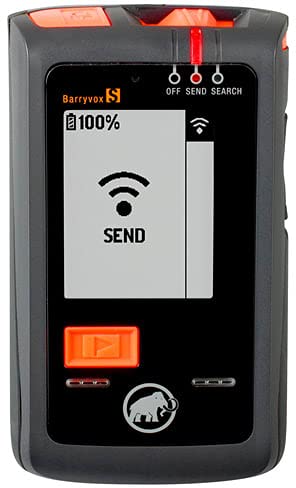
- Effective digital search strip width: 70 meters
- Digital receiving range: 70 meters
- Extended search range: extended receiving bandwidth (analog): up to 95 m; Extended search strip width (analog): 100 m
- Circular receiving field: almost identical receiving range for X and Y antennas
BCA Tracker3
-
Overview: The BCA Tracker3 is a compact and lightweight digital avalanche beacon designed for simplicity and ease of use. It features a three-antenna system for precise signal detection and offers a user-friendly interface with a clear, easy-to-read display. The Tracker3 excels in multiple burial situations and provides a reliable range, making it an excellent option for both novice and intermediate backcountry skiers.
-
Pros: Lightweight and compact design, user-friendly interface, affordable price.
-
Cons: Limited advanced features compared to higher-end models.
-
User reviews: Skiers appreciate the compactness and simplicity of the BCA Tracker3, praising its ease of use and reliable performance, particularly in multiple burial scenarios.
 Backcountry Access Tracker 3 Beacon$329.27Buy Now More Info
- Unit weight with batteries: 7.6 ounces/215 grams, Harness weight: 3.5 oz/100 grams
- Frequency: 457 kHz, Batteries: three AAA alkaline
- Battery life: minimum 1 hour in search mode after 200 hours in transmit mode (approximately 250 hours in transmit only or 50 hours in search only)
- Range: 50 meters
Mtn Cult may earn a commission if you buy through our links, at no extra cost to you.11/27/2026 04:14 am GMT
Pieps DSP Sport
-
Overview: The Pieps DSP Sport is a digital avalanche beacon known for its user-friendly design and excellent performance. It features a triple-antenna system for precise signal detection and a large, easy-to-read display. The beacon offers a generous range and multiple burial indicator, making it suitable for both beginners and experienced backcountry skiers.
-
Pros: Intuitive user interface, long battery life, reliable multiple burial detection.
-
Cons: Limited advanced features compared to higher-end models.
-
User reviews: Skiers appreciate the simplicity and reliability of the Pieps DSP Sport, particularly its user-friendly interface and excellent range performance.
Ortovox 3+
-
Overview: The Ortovox 3+ is a popular digital avalanche beacon known for its simplicity and reliability. It features a three-antenna system and offers a user-friendly interface with clear visual and audio indicators. The beacon provides a reliable range and includes smart features such as automatic switching to transmit mode in the event of a secondary avalanche. The Ortovox 3+ is an excellent choice for beginner and intermediate skiers seeking a dependable and straightforward beacon.
-
Pros: Simple and intuitive design, reliable range, automatic switch function.
-
Cons: Lacks advanced features for professional use.
-
User reviews: Backcountry enthusiasts appreciate the Ortovox 3+ for its user-friendly interface, clear and intuitive controls, and reliable performance in real-life search scenarios.
These are just a few examples of the top avalanche beacons available in the market. It’s important to consider your specific needs, skill level, and budget when making a final decision. Additionally, keep in mind that technology advances rapidly, so it’s recommended to research the most up-to-date models and read user reviews to ensure you choose a beacon that aligns with your requirements and provides reliable performance in the backcountry.
Choosing the Right Avalanche Beacon for You
Selecting the right avalanche beacon is a crucial decision that requires careful consideration of various factors. Each skier’s needs and preferences may differ, depending on their skill level, experience, and specific backcountry objectives. To assist you in making an informed decision, consider the following key points when choosing an avalanche beacon:
Assessing your needs and skill level
First and foremost, evaluate your skill level and experience in backcountry skiing. Are you a beginner, intermediate, or advanced skier? Beginners may prioritize ease of use and simplicity, while experienced backcountry skiers may require advanced features for complex search scenarios. Consider your current abilities and choose a beacon that matches your proficiency level.
Additionally, assess the types of terrain you typically ski in. Do you venture into remote and challenging areas with steep slopes, or do you prefer more moderate terrain? Understanding the type of skiing you engage in will help determine the necessary range and search capabilities required from your beacon.
Considering budget constraints
Establishing a budget is an important aspect of the decision-making process. Avalanche beacons vary in price, with entry-level models being more affordable, while high-end beacons with advanced features tend to be pricier. Determine your budget range and seek a balance between the features you require and the price you are willing to pay.
Remember that investing in a reliable and high-quality beacon is essential for your safety and the safety of your skiing partners. Skimping on a beacon to save money can compromise your ability to locate and rescue a buried skier effectively. Consider the beacon as an investment in your safety and prioritize its importance when budgeting for your backcountry gear.
Consulting with experienced backcountry skiers and professionals
Seeking advice and insights from experienced backcountry skiers and professionals can provide valuable perspectives. Talk to instructors, guides, and fellow backcountry enthusiasts who have firsthand experience with different avalanche beacons. Their recommendations and insights can help you narrow down your options and understand the practical implications of different beacon features.
Attend backcountry safety courses or workshops, where experts often discuss and demonstrate various beacon models. These educational opportunities allow you to familiarize yourself with different beacons, their functionalities, and their pros and cons. Engaging in discussions and seeking guidance from knowledgeable individuals can significantly contribute to your decision-making process.
Evaluating multiple options through rentals or demo programs
When possible, consider renting or borrowing different avalanche beacons to gain firsthand experience with their functionality. Some backcountry gear shops or outdoor organizations offer rental programs or demo events where you can try out different models. This hands-on approach allows you to assess the usability, comfort, and performance of various beacons in real-life settings.
Testing multiple options enables you to identify the features that resonate with you, such as the user interface, display readability, and overall feel of the beacon. It’s essential to choose a beacon that feels comfortable and intuitive to use, as you may need to operate it quickly and efficiently during high-stress situations.
By evaluating multiple options through rentals or demo programs, you can make a more informed decision based on your personal experience and preferences.
Remember, selecting the right avalanche beacon is a critical step in your backcountry safety toolkit. It is not a decision to be taken lightly, as it can significantly impact your ability to navigate and respond to avalanche incidents. Invest the time and effort to research, consult with experts, and consider your specific needs to choose a beacon that provides reliable performance and enhances your safety in the backcountry.
In the next section, we will explore the proper use and maintenance of avalanche beacons, emphasizing the importance of regular training and practice to maximize their effectiveness during rescue operations.
Proper Use and Maintenance of Avalanche Beacons
Avalanche beacons are indispensable tools in the backcountry, but their effectiveness relies on proper use and regular maintenance. Understanding how to use your beacon correctly and keeping it in optimal condition ensures that it performs reliably when it matters most. Here are essential guidelines for the proper use and maintenance of avalanche beacons:
Understanding the proper search technique
Familiarize yourself with the recommended search technique for your specific beacon model. Each beacon may have slight variations in the search process, so carefully read the user manual and practice using the beacon in controlled settings.
Typically, the search process involves switching the beacon to search mode, holding it horizontally, and systematically moving across the avalanche debris field while following the directional indicators and distance readings on the beacon’s display. Practice conducting mock searches with fellow backcountry skiers to refine your skills and become proficient in using your specific beacon.
Regular maintenance and testing of your beacon
Regular maintenance and testing of your avalanche beacon are crucial to ensure its reliability. Here are some maintenance tasks to incorporate into your routine:
-
Battery check: Before each backcountry outing, verify that your beacon’s batteries are fully charged or replaced with fresh ones. Follow the manufacturer’s recommendations for battery type and replacement intervals. Consider carrying spare batteries in your pack as a backup.
-
Self-test function: Most beacons have a self-test function that allows you to verify their internal components and functionality. Activate this function periodically to ensure that all components are working correctly. Refer to your beacon’s user manual for specific instructions.
-
Firmware updates: Manufacturers occasionally release firmware updates to enhance beacon performance or address any software issues. Stay informed about firmware updates for your beacon model and install them as recommended by the manufacturer. Updates often provide improvements to search algorithms, user interfaces, and battery optimization.
-
Visual inspection: Regularly inspect your beacon for any physical damage, such as cracks, loose parts, or water ingress. Ensure that the antenna, screen, and buttons are clean and free from debris. If you notice any issues, contact the manufacturer or a certified technician for guidance.
Staying updated on firmware and software updates
Avalanche beacon technology continues to evolve, and manufacturers may release firmware or software updates to enhance performance, address bugs, or introduce new features. It is essential to stay informed about updates for your specific beacon model.
Check the manufacturer’s website periodically for firmware or software updates. Some beacons can be updated using a computer or smartphone, while others may require sending the beacon to an authorized service center. Keeping your beacon up to date ensures that you have access to the latest improvements and advancements in search technology.
Recommended training and practice exercises
Investing in proper training and practicing with your beacon is crucial for developing the skills necessary to respond effectively in an avalanche situation. Consider participating in avalanche safety courses, backcountry skiing workshops, or training sessions led by experienced guides or avalanche professionals.
These courses provide comprehensive instruction on avalanche safety, including proper beacon use, search techniques, and rescue procedures. Engage in mock search exercises with partners to simulate real-life scenarios and enhance your proficiency. Regular practice improves your speed and accuracy in locating buried victims, ensuring that you can respond swiftly during an avalanche emergency.
Additionally, familiarize yourself with the local avalanche rescue resources in the areas you frequent. Understand how professional rescue teams operate and coordinate with their procedures if needed. Being knowledgeable about local resources can aid in a coordinated and efficient rescue effort in case of an incident.
Remember, possessing an avalanche beacon is not enough; regular training and practice are vital to maximize its effectiveness during rescue operations. The more comfortable and familiar you become with your beacon, the better prepared you will be to respond promptly and confidently in critical situations.
Incorporating proper use and maintenance of your avalanche beacon into your backcountry routine is essential for your safety and the safety of your skiing partners. Adhering to the recommended search technique, performing regular maintenance checks, staying updated on firmware updates, and participating in training and practice exercises will ensure that your beacon performs optimally when faced with an avalanche emergency.
In the final section, we will summarize the key points discussed throughout the article and emphasize the importance of ongoing education and practice in backcountry safety.
Forge Your Path, Protect Your Journey: Prioritizing Safety in the Backcountry
As backcountry skiing continues to grow in popularity, it is imperative that skiers prioritize safety and equip themselves with the necessary tools and knowledge to mitigate the risks associated with avalanches. Among these tools, the avalanche beacon stands as a critical lifeline in the event of an avalanche, allowing for swift and accurate location of buried skiers. Throughout this article, we have explored the intricacies of avalanche beacons, guiding you through the process of selecting the best beacon for your needs.
We began by understanding the fundamental workings of avalanche beacons, delving into their purpose, functionality, and the different types available. We then explored key considerations for choosing an avalanche beacon, including range and search capabilities, ease of use and user interface, battery life and power management, durability, and additional features and functions.
To provide you with practical insights, we listed some of the top avalanche beacons on the market, highlighting their features, pros and cons, and user experiences. However, it is essential to conduct thorough research and seek the most up-to-date information when making your final purchasing decision, as new models may emerge and advancements in technology are continually being made.
We emphasized the significance of assessing your needs and skill level, considering budget constraints, consulting with experienced backcountry skiers and professionals, and evaluating multiple options through rentals or demo programs. Taking these steps ensures that you choose a beacon that aligns with your specific requirements and enhances your safety in the backcountry.
Furthermore, we emphasized the importance of proper use and maintenance of avalanche beacons. Understanding the recommended search technique, conducting regular maintenance checks, staying updated on firmware and software updates, and engaging in training and practice exercises are essential for maximizing the effectiveness of your beacon during rescue operations. Your beacon is only as effective as your knowledge and proficiency in using it.
In conclusion, investing in a high-quality avalanche beacon and developing the necessary skills to operate it correctly are paramount when venturing into the backcountry. However, it is crucial to remember that an avalanche beacon alone cannot guarantee safety. It should be complemented by a comprehensive understanding of avalanche awareness, terrain evaluation, and decision-making processes.
Ongoing education and practice in backcountry safety are vital to stay informed about the latest advancements, techniques, and best practices. Attend avalanche safety courses, participate in workshops, and engage in regular training exercises to refine your skills and increase your preparedness for potential avalanche incidents.
As an avid backcountry skier, prioritize safety above all else. Embrace the beauty and adventure that the backcountry offers while respecting the inherent risks and taking proactive measures to mitigate them. By choosing the right avalanche beacon, maintaining it properly, and continuously expanding your knowledge, you can enjoy the freedom of the backcountry with confidence and peace of mind.
Stay safe, stay informed, and continue to grow as a responsible backcountry skier. Happy skiing!