Utah Fishing License Guide (2027): Cost, Where to Buy and the Rules That Matter
Quick answer: Anyone 12 or older needs a license to fish in Utah. For an adult resident (18-64), a 365-day fishing license costs $40. A nonresident adult pays $120 for a year, or $44 for 3 days. Buy it in about five minutes at wildlife.utah.gov, in the Utah Hunting and Fishing app, at a license agent like a sporting goods store, or by phone at 800-221-0659. Your license is good for 365 days from the day you buy it, not the calendar year.
Mtn Cult earns a commission from some links on this page at no cost to you. It never decides what we recommend. Affiliate disclosure.
Utah has some of the best small-stream and tailwater fishing in the West, from the Provo River to the Green below Flaming Gorge. The license is the easy part. This guide covers what each license costs, which one to buy, and the handful of rules that catch people out. If you’re new to the sport, start with our complete guide to getting started in fly fishing and our tenkara for beginners guide.
1. Who needs a Utah fishing license?
- Age 12 and older: you need a fishing license or a combination license. (Utah DWR)
- Under 12: no license needed. Kids under 12 can keep a full daily limit and can even use two poles or a setline.
- Free Fishing Day: once a year on a Saturday in early June (June 6 in 2026), anyone can fish Utah waters without a license. All other rules and limits still apply. DWR announces the date each spring.
- Tribal lands: waters on tribal land, such as the Uintah and Ouray Reservation or the Navajo Nation, are managed by the tribes and have their own permit rules. Check with the tribe before you fish.
2. How much does a Utah fishing license cost?
These are the prices in the official 2026 Utah Fishing Guidebook. Nonresident prices went up on July 1, 2025, so older price lists you find online (and some DWR web pages) still show the old numbers. Resident prices did not change.
Resident fishing licenses
| License | Price |
|---|---|
| 365-day, age 12-13 | $5 |
| 365-day, age 14-17 | $16 |
| 365-day, age 18-64 | $40 (multi-year: $39/yr, up to 5 years) |
| 365-day, age 65+ | $31 (multi-year: $31/yr) |
| Disabled veteran (20%+ service-connected) | $12 |
| 3-day | $19 |
| 7-day | $30 |
Nonresident fishing licenses
| License | Price |
|---|---|
| 365-day, age 12-13 | $18 |
| 365-day, age 14-17 | $44 |
| 365-day, age 18+ | $120 (multi-year: $119/yr, up to 5 years) |
| 3-day | $44 |
| 7-day | $91 |
Combination licenses (fishing + small game)
A combination license adds small game hunting and lets you apply for big game permits. Residents 18-64 pay $44 ($43/yr multi-year), so it’s only $4 more than fishing alone. Nonresidents pay $190 (adults) or $58 (ages 14-17).
Add-ons
- Setline permit: $22 resident, $48 nonresident.
- Flaming Gorge reciprocal permit: $59 for Utah’s permit, which Wyoming residents buy to fish the Utah side. Utah residents buy Wyoming’s permit instead (see the border waters section below).
- Cutthroat Slam: $20 adults, $10 for 17 and under. It’s an optional challenge to catch Utah’s native cutthroat subspecies, and the money goes to native trout projects.
- Boat AIS decal: if you fish from a motorized boat, it needs an aquatic invasive species decal ($20 resident, $25 nonresident). DWR has proposed raising it for 2027.
From the Mtn Cult crew: We buy the multi-year combination license. For a few dollars more than fishing alone, it covers small game too and lets you apply for the big game draws. The multi-year part saves a little every year, and best of all you stop thinking about it. There’s no scramble to renew the night before a trip.
3. Which license should you buy?
- You live in Utah and fish more than twice a year: the 365-day license at $40. It beats two 3-day licenses ($38) by the third trip.
- You also hunt grouse or rabbits, or want to apply for big game draws: the combination license is only $4 more.
- You know you’ll keep fishing: a multi-year license saves a little each year and removes one thing to remember.
- Visiting for a weekend: the nonresident 3-day ($44). For a week, the 7-day ($91). For three or more trips a year, the 365-day ($120).
- Bringing kids: under-12s are free. A 12- or 13-year-old’s license is only $5.
4. Where to buy a Utah fishing license
- Online at wildlife.utah.gov. It takes about five minutes.
- Utah Hunting and Fishing app: it holds licenses for the whole family, and a digital license on your phone is legal proof. (DWR)
- License agents: most sporting goods stores and many fly shops sell licenses. It’s a good excuse to ask what’s fishing well.
- By phone: 800-221-0659.
- DWR offices in Salt Lake City and around the state. (Utah DWR)
Licenses can’t be transferred or altered, and you must carry yours (paper or digital) while you fish.
From the Mtn Cult crew: We buy ours online and carry it both ways: in the app, plus a paper copy in the vest or truck. Phones die and canyons don’t have signal, so a backup copy is cheap insurance.
5. Rules that trip people up
Border waters: Flaming Gorge, Bear Lake and Lake Powell
- Bear Lake (Utah/Idaho): a valid Utah or Idaho license covers the whole lake.
- Lake Powell (Utah/Arizona): a valid Utah or Arizona license covers both sides.
- Flaming Gorge (Utah/Wyoming): this is the one that catches people. Utah and Wyoming residents need their home-state license plus the other state’s reciprocal permit to fish across the line. Nonresidents of both states need both states’ licenses.
- On all border waters, you only get one daily limit, even with two licenses. (DWR)
Wildlife Management Area (WMA) access
Since 2025, adults 18+ need a hunting, fishing or combination license to enter many Utah WMAs. A 2026 law (HB30) added a free option: watch a short educational video and get a free digital access permit. The rule is being phased in: Davis, Salt Lake, Utah and Weber counties from July 1, 2026, most other counties from July 1, 2027, and all WMAs from July 1, 2028. Your fishing license covers you. (DWR 2026 legislative update)
Know the water’s rules before you go
Many Blue Ribbon waters have artificial-fly-and-lure-only rules, slot limits or catch-and-release sections. Check the current Utah Fishing Guidebook and DWR’s Fish Utah map before every trip.
Proposed for 2027: DWR has proposed changes including a zero limit on roundtail chub, catch-and-release status for 14 native species, and a walleye slot at Starvation Reservoir. Check the 2027 guidebook for the final rules. (TownLift, Aug 2026)
Tenkara and fly anglers
Tenkara anglers need the same license as everyone else. See how tenkara is changing the way we see fly fishing.
6. Utah’s Blue Ribbon Fisheries: where your license money goes
Part of every Utah fishing license pays for the Blue Ribbon Fisheries program, Utah’s list of its best fishing waters. Licenses also pay for stocking, the biologists who manage Utah’s fisheries, and most of the state’s Wildlife Management Areas. (UPR, July 2026)
What Blue Ribbon means: a water earns the status after DWR biologists and the governor-appointed Blue Ribbon Fisheries Advisory Council (13 members) review it. They look at four things: the quality of the fishing, the quality of the outdoor experience, the fish habitat, and the economic benefit to the area. In practice that means high catch rates or bigger fish, plus good access. The council reviews waters every year, and a water can lose the status. Scofield Reservoir lost it in 2017 after illegally stocked Utah chubs took over, then won it back once DWR rebuilt the fishery. (DWR; DWR on Scofield)
By the numbers:
- 41 waters plus two mountain areas, the Uinta Mountains and Boulder Mountain, with their streams and lakes. (DWR, July 2026)
- Started in 2001 under Gov. Mike Leavitt, and formalized by executive order in 2005.
- Over $4.2 million for more than 210 projects, which grows to more than $46.5 million with partner funding. That has improved over 166 miles of stream and 10,700 acres of habitat.
- 2026-27: over $446,000 for 13 projects. Examples include fish habitat structures at Jordanelle, better access at Starvation, a water-quality siphon at Panguitch Lake to cut fish kills, and streambank repair on the Duchesne River.
How to use it: if you’re new to Utah or planning a trip, the Blue Ribbon list is a shortlist of waters where the fishing is reliably good. Each one has its own rules, so check the guidebook for that water before you go. Find them on DWR’s Blue Ribbon page and the Fish Utah map.
7. What to pack with your license
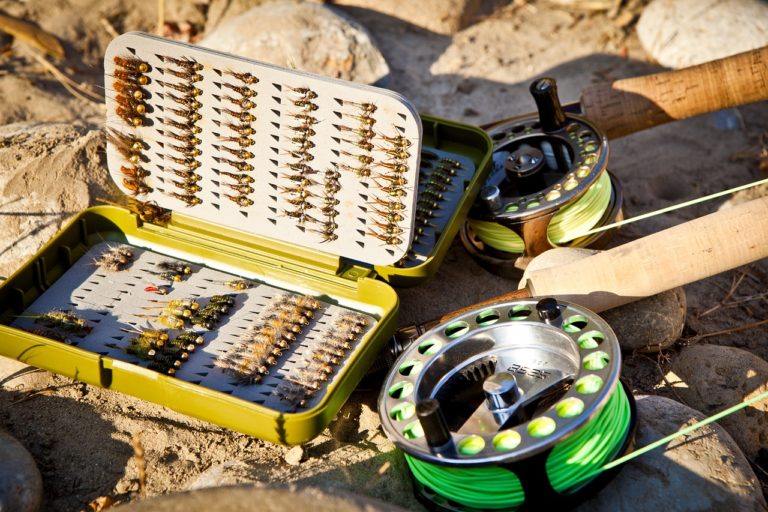
- A tenkara rod for small streams: simple, packable, and perfect for the Wasatch. Shop tenkara rods on Amazon
- Polarized sunglasses: to see fish and protect your eyes from hooks. Shop polarized fishing sunglasses
- A rubber landing net: easier on fish you release. Shop rubber landing nets
- Forceps and a nipper: for barbless hooks and quick releases. Shop fly fishing forceps
- A Utah road and recreation atlas: for finding access when your phone has no signal. Shop Utah atlases
Building your kit? See fly fishing reels and what to look for, our Sage fly rods guide, stillwater fly fishing, and backpacking fly fishing. Heading out for the weekend? Use our camping checklist, pack a hiking first aid kit, and dress in layers for cold mornings. Bringing the dog? Read hiking with dogs. More in our fly fishing and tenkara sections.
FAQ
How much is a Utah fishing license in 2027?
An adult resident 365-day license is $40, and an adult nonresident 365-day license is $120. Short-term licenses run $19 (3-day) to $30 (7-day) for residents, and $44 to $91 for nonresidents.
Is a Utah fishing license good for the calendar year?
No. It’s good for 365 days from the date you buy it.
Do kids need a fishing license in Utah?
Kids under 12 don’t. Ages 12-13 pay $5 for residents and $18 for nonresidents.
Can I show my fishing license on my phone in Utah?
Yes. The Utah Hunting and Fishing app holds a legal digital license.
Does my Utah license work at Flaming Gorge?
Only on the Utah side. Utah residents need a Wyoming reciprocal permit to fish the Wyoming side.
Do I need a fishing license to visit a Utah WMA?
In many WMAs, adults 18+ need a hunting or fishing license, or the free digital access permit. Your fishing license covers you.
Is there a free fishing day in Utah?
Yes. Once a year, usually on a Saturday in early June, you can fish without a license.
Sources
- Utah DWR: 2026 Utah Fishing Guidebook, license and permit fees (p. 6)
- Utah DWR: License, permit and miscellaneous fees
- Utah Fishing Guidebook: licenses and permits
- Utah Fishing Guidebook: license and permit fees
- Utah Fishing Guidebook 2026 (PDF)
- Utah Admin. Code R657-13-3
- Utah DWR: 2026 legislative session wildlife laws
- Utah DWR: 2025 nonresident fee increases
- Utah DWR: Blue Ribbon Fisheries
- Utah DWR: Blue Ribbon allocates $446K (2026)
- Utah DWR: Scofield Blue Ribbon status
- TownLift: DWR proposes fishing changes for 2027
- UPR: Where your Utah fishing license money goes